
Table of Contents
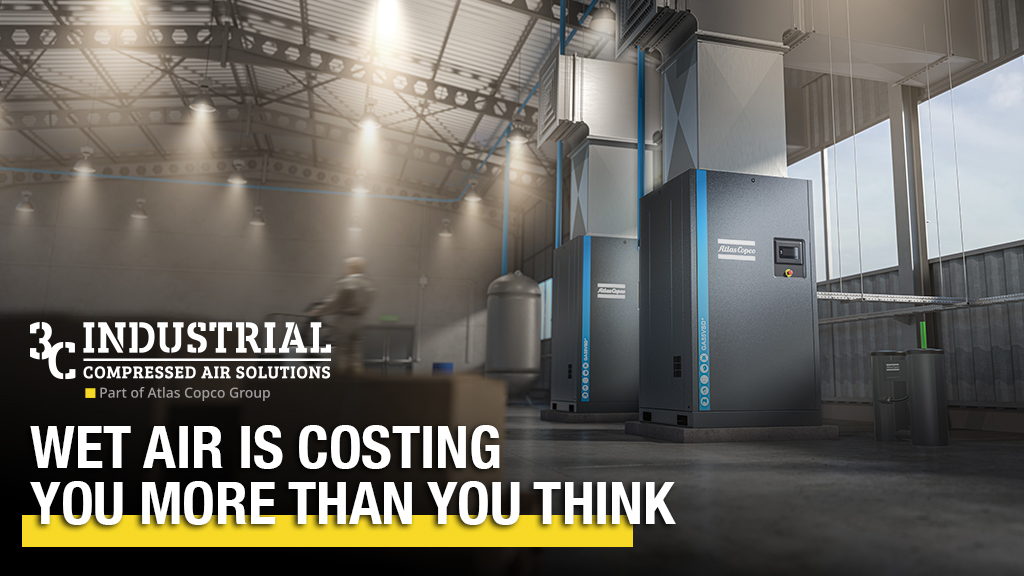
Walk into almost any facility running compressed air, and you’ll likely find the same hidden problem: moisture. While compressors often appear to be operating normally, water inside compressed air lines quietly causes corrosion, tool failures, product defects, and costly downtime.
At 3C Industrial, we regularly diagnose air compressor water issues across Texas. What begins as a routine service call often reveals rusted fittings, contaminated pneumatic
equipment, or water damage that could have been prevented with proper air treatment. In many cases, the compressor isn’t the problem, the moisture is.
Where Does Water Come From?
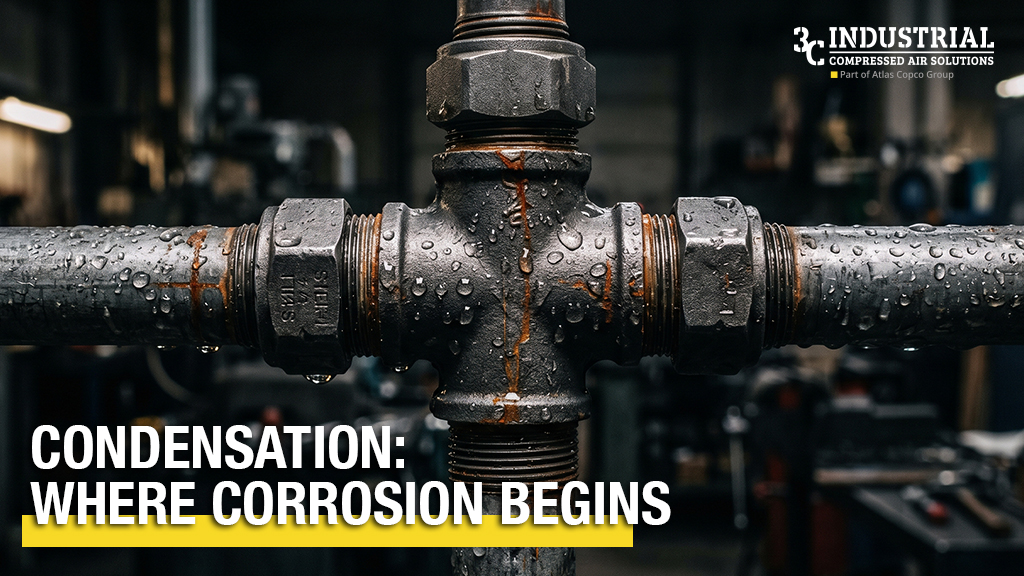
Atmospheric air naturally contains water vapor. When an air compressor compresses that air to operating pressure, the moisture becomes concentrated. As the compressed air cools while traveling through the system, the vapor condenses into liquid water inside the piping.
Texas humidity makes this even worse. Facilities along the Gulf Coast pull in moisture-rich air before compression even begins, and temperature differences between compressor rooms and piping encourage condensation throughout the system.
The Real Cost of Air Compressor Water Issues
Water in compressed air lines creates much more than cosmetic problems.
Corrosion
Standing water causes steel piping to rust from the inside out. Rust particles travel downstream, damaging cylinders, valves, seals, and pneumatic equipment.
Equipment Failure
Moisture washes lubrication from air tools and actuators, accelerating wear and increasing the likelihood of unexpected breakdowns.
Product Contamination
Food processing, pharmaceutical manufacturing, painting, and precision finishing applications all depend on clean, dry compressed air. Moisture can contaminate products, create coating defects, and introduce compliance concerns.
Freeze Damage
Outdoor compressed air systems are vulnerable during cold weather. Trapped water can freeze, expand, and crack fittings or piping.
Higher Energy Costs
Water restricts airflow and forces moisture separators and drains to work harder. A clogged or undersized compressed air line water filter also creates pressure loss, making the compressor consume more energy to maintain pressure.
Ready to experience reliable compressed air?
Find out what 3C Industrial can do for your next project.
How to Remove Moisture From Compressed Air
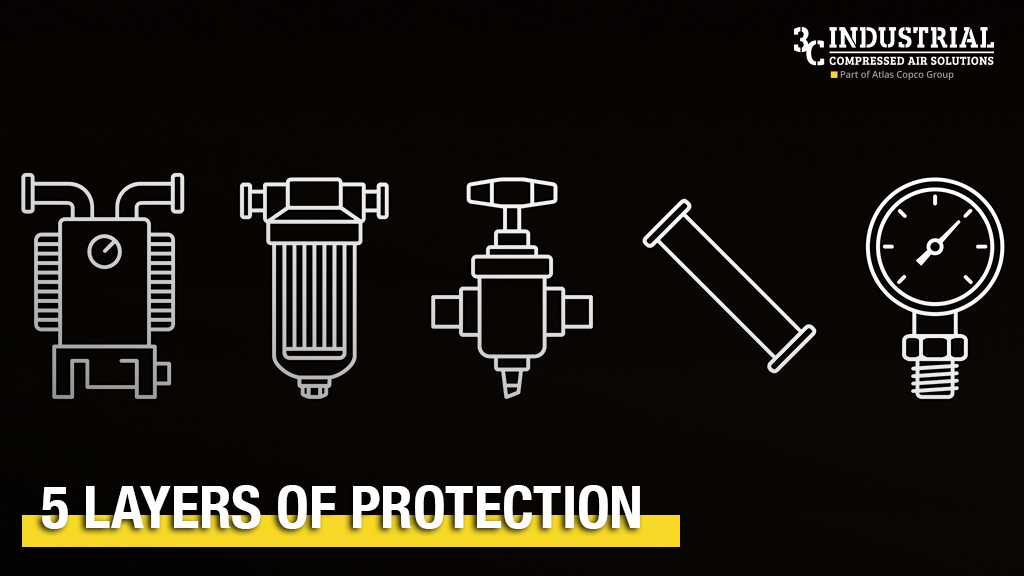
Understanding how to remove moisture from compressed air starts with treating the entire system instead of relying on a single solution.
1. Install the Right Air Dryer
A refrigerated or desiccant dryer removes most water vapor before air enters the distribution system. Proper sizing is essential, particularly in humid climates where undersized dryers struggle during peak conditions.
Even with a dryer installed, a compressed air line water filter provides additional protection by capturing moisture that forms farther downstream.
2. Use a Compressed Air Line Water Filter
A compressed air line water filter should be installed after the dryer and at critical point-of-use locations. Coalescing filters capture fine water droplets and aerosols that dryers may miss, protecting spray equipment, instrumentation, pneumatic controls, and sensitive manufacturing processes.
Facilities with long pipe runs or multiple branches benefit significantly from strategically placed filtration.
3. Install Automatic Condensate Drains
Manual drains are often forgotten or left open. Automatic condensate drains continuously remove collected water from compressors, receiver tanks, and low points throughout the piping system without requiring operator intervention.
When combined with a compressed air line water filter, they provide multiple layers of moisture protection.
4. Design the Piping Correctly
Many moisture problems result from poor piping design rather than inadequate equipment.
Main air lines should slope toward drain locations, while drop legs should connect from the top of the header so condensed water continues flowing past the connection instead of entering downstream equipment.
5. Monitor Dew Point
Pressure alone doesn’t indicate air quality.
Dew point monitoring measures the actual moisture content inside the compressed air system and helps identify failing dryers or overloaded filtration before they become major problems.
Industries That Need Dry Compressed Air
Some facilities can tolerate small amounts of moisture. Others cannot.
Food and beverage manufacturers require clean compressed air to help maintain product quality and regulatory compliance.
Medical and pharmaceutical facilities rely on dry, contaminant-free air during production and packaging.
Aerospace and automotive manufacturers depend on clean compressed air for painting, assembly, and precision pneumatic equipment where contamination can result in rejected parts.
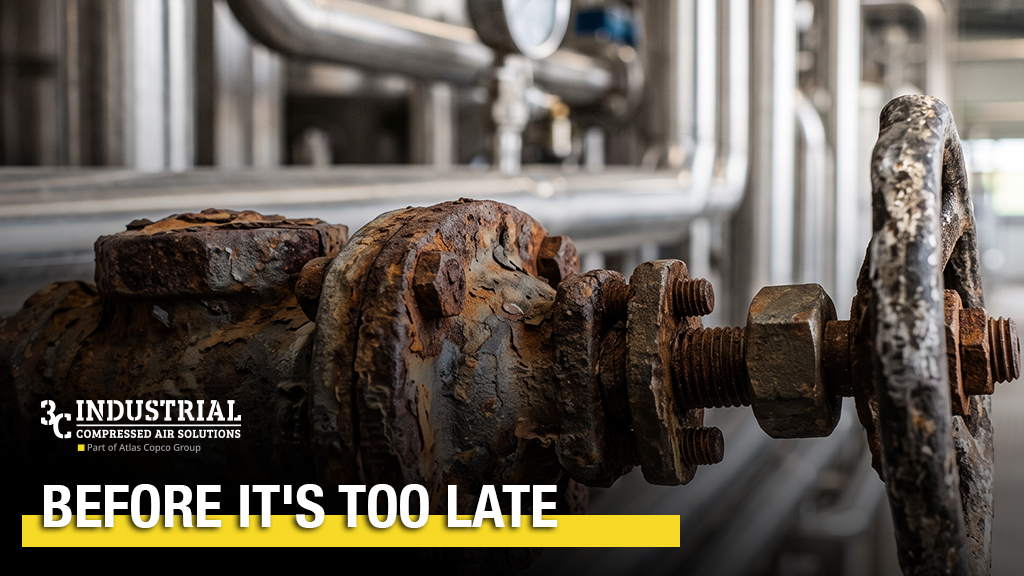
Oil and gas operations, shipyards, and construction sites frequently operate in harsh environments where moisture accelerates corrosion and equipment wear.
Across every industry, unmanaged air compressor water issues eventually become maintenance expenses, production interruptions, or product quality problems.
Not sure your air treatment is doing enough?
Partner With 3C Industrial
Diagnosing moisture problems requires more than replacing a filter. It involves evaluating compressor performance, piping layout, drying equipment, and point-of-use applications to determine exactly where moisture enters the system.
That’s what 3C Industrial does every day across Texas. We service leading compressor brands including Kaishan, Chicago Pneumatic, Atlas Copco, and Ozen Air while supplying complete air treatment solutions, including dryers, inline filtration systems, condensate management equipment, and properly sized compressed air line water filter installations.
As part of the Atlas Copco Group, we now pair the responsive local service customers know and trust with the global expertise, expanded resources, and broader compressed air solutions of an industry leader.
Whether you need a complete air treatment system, additional filtration, or help troubleshooting recurring moisture problems, our teams in Austin, San Antonio, Houston, Corpus Christi, and Fort Worth can help.
Our preventive maintenance programs also inspect dryers, drains, and filters to identify developing moisture issues before they become costly failures. If equipment goes down, our emergency rental fleet helps keep production moving while repairs are completed.
Keep Moisture From Becoming a Costly Problem
Water inside compressed air lines rarely causes immediate catastrophic failure. Instead, it gradually shortens equipment life, increases maintenance costs, and creates quality problems that become expensive over time.
Learning how to remove moisture from compressed air with the right combination of dryers, drains, and a properly sized compressed air line water filter is one of the most valuable investments you can make in your compressed air system.
If your facility has experienced rust, sticky valves, premature tool wear, or unexplained product defects, it’s time to evaluate your air treatment system and ensure your compressed air line water filter is providing the protection your operation needs.
What can the right compressed air system do for your operation?
Contact 3C Industrial today to learn more.
FAQs
What causes water in compressed air lines?
Water forms because atmospheric air contains water vapor. Compression concentrates that moisture, and as the compressed air cools inside the receiver tank and piping, the vapor condenses into liquid water. High humidity and temperature changes can increase condensation throughout the system.
How do you remove moisture from compressed air?
Removing moisture typically requires a combination of a properly sized air dryer, automatic condensate drains, inline filtration, correct piping design and dew point monitoring. Treating the entire compressed air system is more effective than relying on one filter or drain.
Where should a compressed air line water filter be installed?
Summer humidity increases the amount of water vapor entering a compressed air system. As air is compressed and cooled, excess moisture condenses inside tanks, piping, and air treatment equipment. If condensate drains and dryers cannot keep up with the increased moisture load, facilities may experience corrosion, contamination, reduced air quality, and equipment reliability issues.
Is a compressed air line water filter enough to keep the system dry?
Preventing compressor problems during extreme summer temperatures starts with proactive maintenance. Facilities should inspect and clean coolers, replace clogged filters, verify proper ventilation, monitor lubricant condition, test condensate drains, and evaluate dryer performance before peak summer heat arrives. Preventive service helps reduce downtime, improve efficiency, and extend equipment life.
What problems can moisture cause in a compressed air system?
Preventing compressor problems during extreme summer temperatures starts with proactive maintenance. Facilities should inspect and clean coolers, replace clogged filters, verify proper ventilation, monitor lubricant condition, test condensate drains, and evaluate dryer performance before peak summer heat arrives. Preventive service helps reduce downtime, improve efficiency, and extend equipment life.
